Views of robots that I like. The word "robot" comes from a 1920 book by the Czech writer Karl Capek entitled "Rossom's Universal Robots." The word is from the Czech for serf labour or slave.
A 19th Century German talking machine.
A Swiss robot from the 1930's.
Too often, as in this scene from a 1941 film, it seems they're after the women!
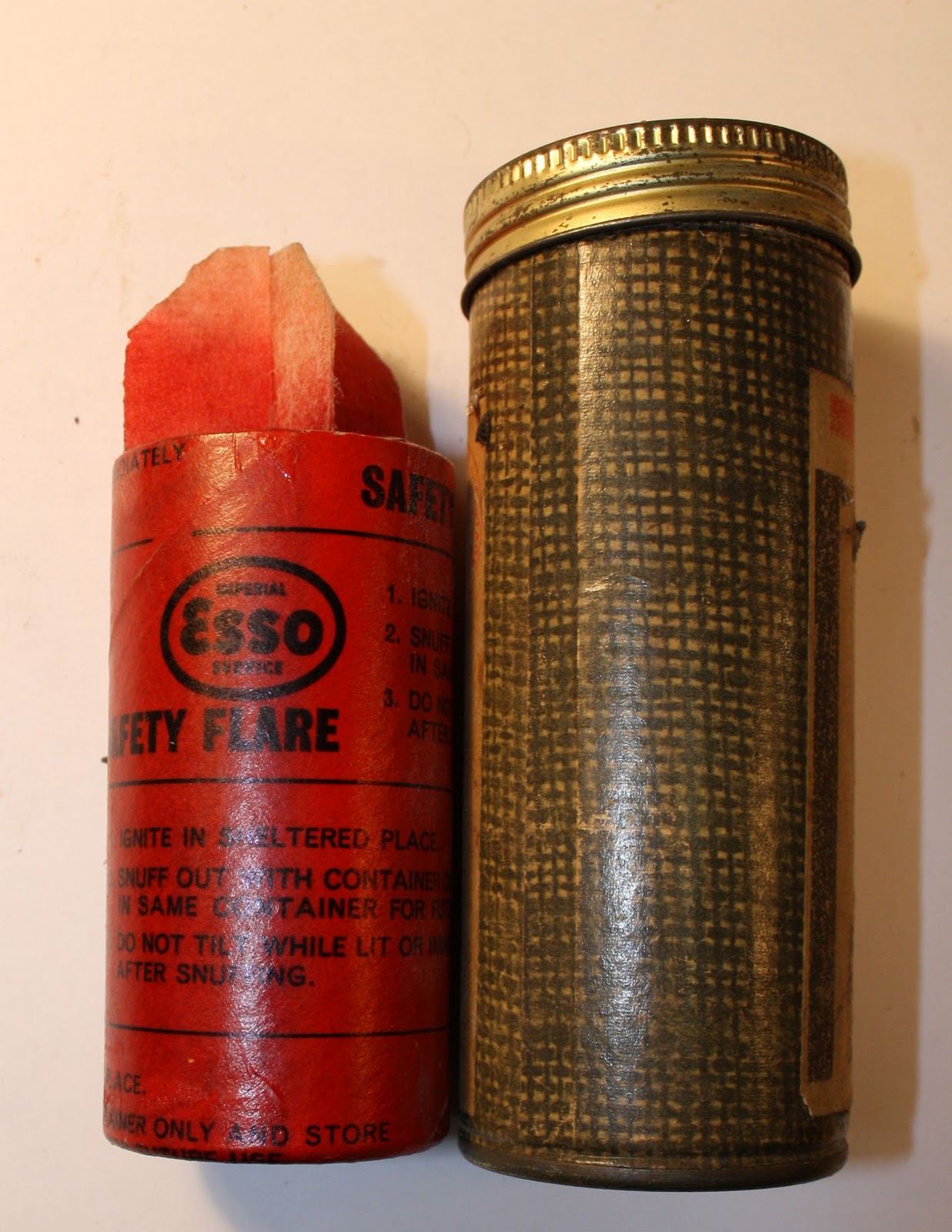
This was apparently a promotional item mailed out (for 5 cents!) by Esso to consumers. It contained an ignitable flare! The bottom of the cardboard cannister advised recipients to "Please open without destroying this tube." Inside was a brochure, asking the recipient to bring the tube to an Esso station for a further inducement. I don't think Canada Post would go along with this today.
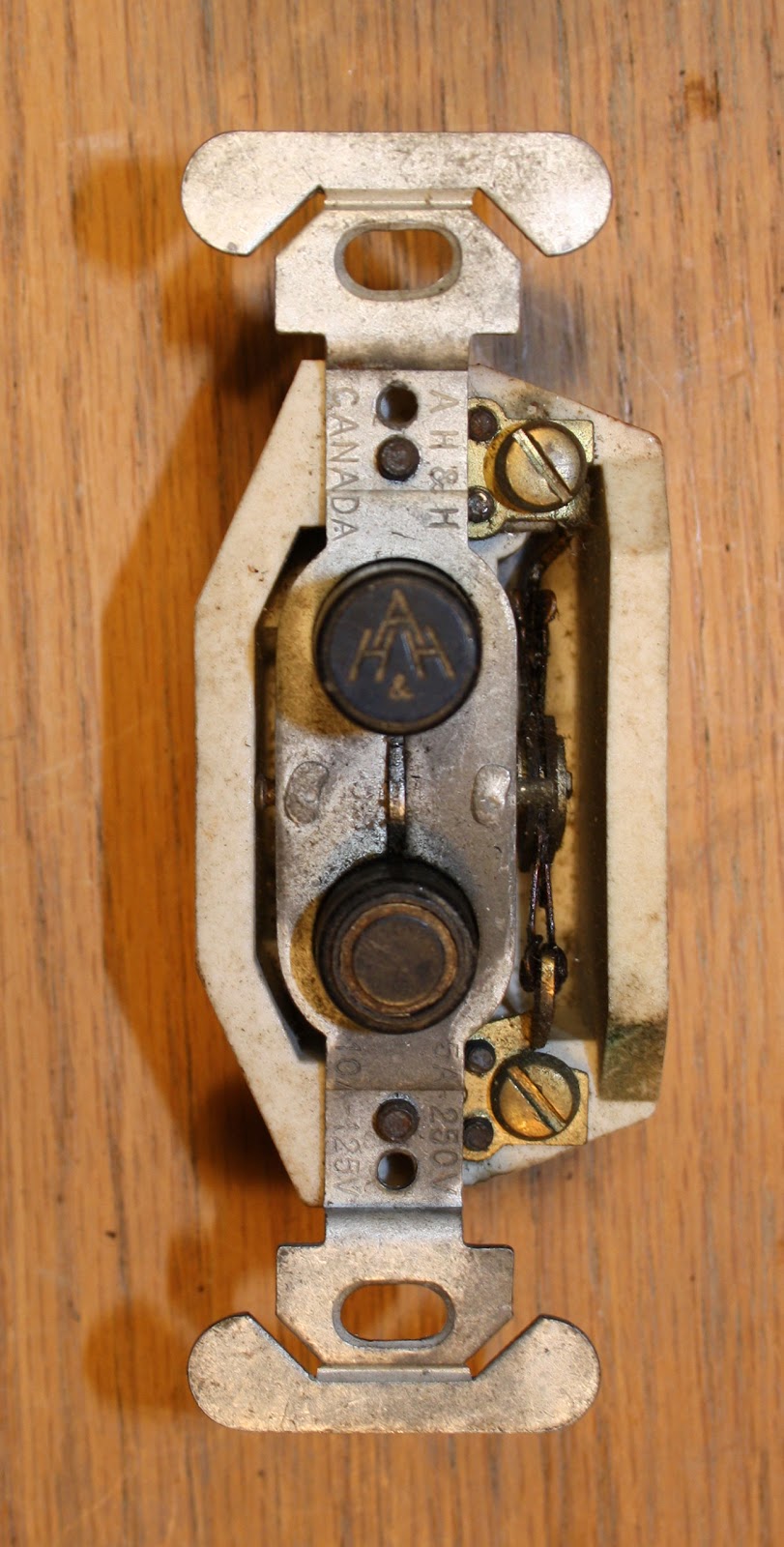
Up until the 1940's, household light switches were of the push-button type. You pushed the top button in to turn on the light, which pushed the bottom button out. You reversed the procedure to turn off the light. The switches required heavy pressure, sometimes got stuck when pushed in, and weren't easy to use in the dark. So, someone came up with the idea of the toggle switch that we use today. This particular switch is marked AH&H, and even has the logo stamped on the end of one button! It stood for Arrow-Hart & Hegeman, a company formed in 1927 with the merger of the Arrow Electric Company and the Hart & Hegeman Manufacturing Company. The company exists to this day as the Arrow Hart division of Cooper Industries, which was bought by Eaton Corp. in 2012 for $11.8 billion.
Wesco is the tradename for A.E. Westood Ltd. of Warwickshire."Ardex Perfetto" were trademarks used by the H.R. Radomski & Co. Ltd of Toronto. No idea about the other makes.
Tanks rolling out of the Chrysler factory during WWII. Chrysler produced 25,507 of these armoured vehicles during the war. Shermans and Grants being built side by side.
Picked up a pair of Disston-Porter shears this week for a buck. I'm a sucker for any tools made entirely of forged steel. No wimpy foamy grips for me, just practical well-made tools designed to last. I was surprised to find that I already had an absolutely identical pair (top, below), marked "Columbian H.S.B. & Co.", which would have been the Hibbard, Spencer, Bartlett & Co. of Chicago, big hardware retailers until the 1960's. Maybe they were marked "Columbian" because they were intended to trim your prize weed? I suspect that Disston (of Philadelphia fame) must have made these for H.S.B. & Co., and continued with the design after being sold to Thomas Mellon Evans (through his Pittsburgh holding company, H.K. Porter). Evans promptly liquidated everything. End of the story. Nice shears, though.